
Kamaiyah Celebrates 10 Years of ‘A Good Night in the Ghetto’ with Historic Oakland Concert
Kamaiyah marked the 10th anniversary of her breakout mixtape with a sold-out, high-energy homecoming show at Oakland’s Fox Theater.
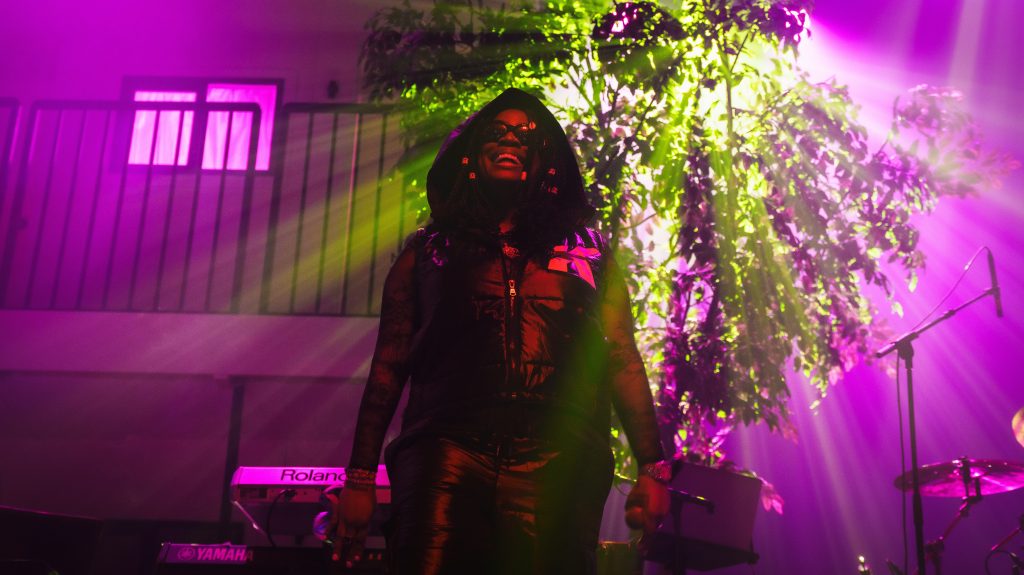
All the makings of A Good Night in the Ghetto were in play Saturday night (March 14) at Oakland’s Fox Theater as Kamaiyah prepared to bring her debut mixtape to life a decade after its release.
Around the corner from the Fox Theater, a group pregamed with a bottle of Hennessy to avoid the “high a** drink prices” inside. A few paces to the left, a man ducked off between two buildings to enjoy a blunt on his break. Blink twice. A bright, candy-apple-green old-school vehicle blasting hardcore rap from pristine subwoofers accelerated to narrowly make the green light. Near the entry, a clique of girls ready to snatch off their earrings after a likely petty misunderstanding decided to let it go out of respect for the rapper’s historic event.
Inside, ticketholders were greeted with a purple bandana matching the rapper’s aesthetic, as well as free posters commemorating the moment, all hand-signed by Kamaiyah herself. Many could not contain their enthusiasm upon seeing the freshly inked autograph. Although there was merch for sale, including T-shirts and vinyl copies of A Good Night in the Ghetto, the complimentary keepsake was just one example of the mutual adoration shared between the performer and her supporters.
With her one-night-only concert, Kamaiyah became the first female rapper to headline at the Fox, which has operated as a live music venue since 1996. The veteran artist shared that she used the show’s ticket proceeds to expand her production and hire a live band, setting the stage for a legendary affair.
“I felt like it’s a 10-year anniversary, [and] the show needs to look like that. Not only that, [but] I come here a lot with artists who are local,” the Oakland, California native candidly tells VIBE before her performance. “I feel like there’s a gap between super stardom and getting money. Sometimes, it’s not about the money, it’s about the experience, and I’d rather give people experience, because then you get more money.”
Excited friends, family, and team members congregated in the venue’s tightly-spaced, bottom-floor area. Fruit, ginger shots, sea moss beverages, tea, and water were on hand, in alignment with her alcohol-free rider and commitment to sobriety. In fact, she encourages those around her to make similar lifestyle choices.
“A lot of people don’t care about their fan base once they get to a certain point in their career,” she continues. “They feel like I’ve progressed past the level of having to touch people, but I don’t feel like you ever stop having to touch people, and it’s something as simple as them getting a bandana.”
Generations of Bay Area bangers and party-starers from the likes of D-Lo, Too $hort, SOB x RBE, Mac Dre, Keyshia Cole, P-Lo, Dru Down, Mike Sherm, and more echoed through the ballroom. A viral TikTok sound where a woman named Tuesday boldly proclaimed “West Oakland bi**h!” earned a thunderous reaction, as all in attendance proudly hyped up the person next to them, rocking side to side with shared reverence for their hometown.

After a quick temp check and call for the audience to fanatically yell louder and louder, it was time for Kamaiyah’s homecoming with the city’s stamp as a reigning queen. Although the classic mixtape reignited nostalgic nights at kickbacks fueled by cheap liquor watered down by ice in off-brand red Solo cups, she did not bank on sentimental yearning and blurry memories for satisfaction. The curtains opened to reveal a makeshift onstage ghetto, mirroring the mixtape cover. The live band sat ready to deliver a fresh take on the arguably no-skip project.
The 34-year-old, who celebrated her birthday the day before, beamed under the spotlight. Her fresh braids were laid and neatly tucked under her signature paisley bandana, adorned by gems that reflected the strobe lights. From backstage to the theater balcony, the energy was undeniable.
From “Ni**as” to “How Does It Feel” to “F**k It Up,” and everything in between, she rapped the throwbacks with her fans joining in for every verse. She emotionally performed “For My Dawg,” which she performed for the first time in years after the loss of her brother, whose battle with cancer is central to the track. Tears flowed, and the audience held space for grief, offering supportive claps and chants.
Kamaiyah did not keep the spotlight for herself, however. Adding to a celebration of Oakland talent, she was joined onstage by 1Umbrella, BossLife Big Spence, Young Bari, G-Eazy, Lil Kayla, and E-40. The love was also spread to the Midwest, with an intentional acknowledgment of the musical spirit shared by Oakland and Detroit through an appearance by Sada Baby.
The entire show exemplified the creative vigor fortified in “The Town,” with Kamaiyah’s genius leading the way. With fervent energy, she danced, rapped, sang, and interacted with fans from center stage, all without missing a beat.
“I feel like I got clarity right now,” she reveals in our conversation. “I’m thinking about my life 20 years from now. What does that look like, and [what do] I want to be the most?”
Kamaiyah is significant to Oakland’s rich musical history. If the long-awaited anniversary show serves as a hint of her career journey, then her future is already written.