
Sandy Ortega Turns Spanish Guitar Into Something Deeply Human
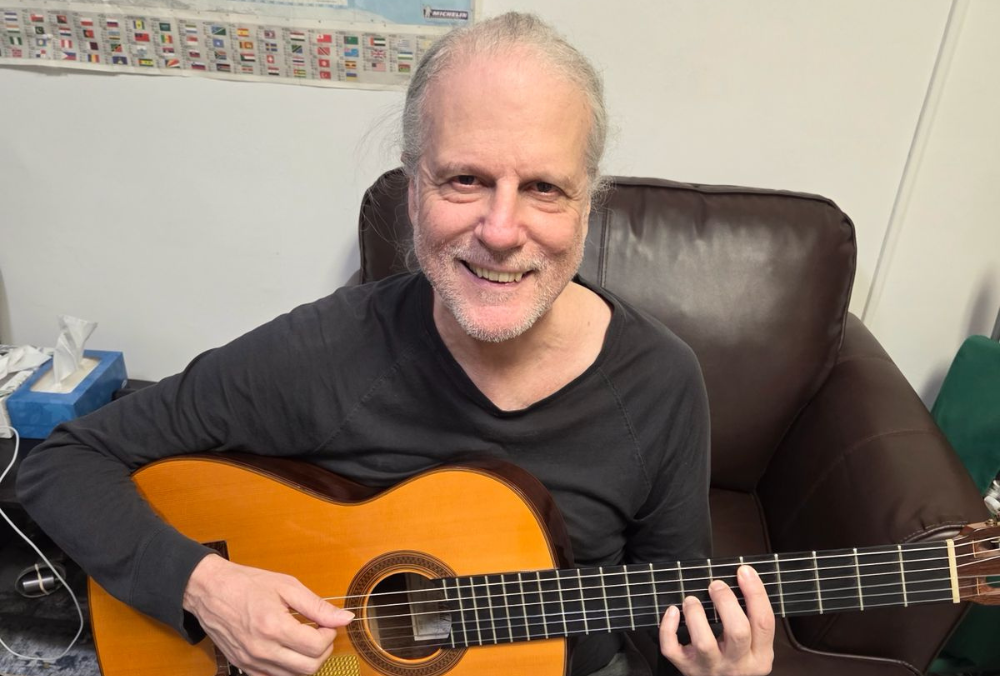
There’s a reason Sandy Ortega’s music feels lived-in rather than carefully engineered. His work doesn’t aim for surface-level perfection — it comes from repetition, solitude, and an almost meditative devotion to Spanish guitar. Every note carries the weight of practice, patience, and a deep respect for tradition, while still feeling intensely personal.
Ortega’s real life is largely quiet and isolated, shaped by the demanding discipline of composing and performing Spanish guitar. That isolation doesn’t disappear when he plays — it seeps into the music. The challenge, he explains, isn’t technical difficulty but learning how not to think. When thought takes over, spontaneity fades. His most honest moments arrive when the mind steps aside completely and the sound simply enters. That’s where the “lived-in” quality of his work comes from — not from intention, but from surrender.
Looking back at his earliest releases, Ortega doesn’t see a divide between then and now in terms of beauty. What’s shifted is his approach. Over time, he’s learned to let go of himself as the central force in creation. His hands, he says, are no longer his own — they’re given over to a higher power. Sometimes what comes through doesn’t make sense immediately. Understanding arrives later, through interpretation. And when it does, the beauty can feel overwhelming, even to him. His journey, as he describes it, has moved from “self” to “above.”
Every track begins the same way: with sound. Not lyrics. Not emotion. Sound. That unmistakable Spanish guitar tone — el toque, the Spanish touch — must be present from the very first note and sustained all the way through. Without it, nothing else matters. It’s the foundation of everything he creates.
That focus explains why Ortega’s music carries a quiet confidence rather than loud statements. This restraint is intentional. Years of practice have taught him that beauty doesn’t need volume to make an impact. Instead, the intensity is compressed into something softer, more intimate. He openly draws inspiration from the great Spanish composers of the Romantic Era, channeling their emotional depth without excess.
For Ortega, a “good song” has always had el toque, but now it’s defined by something deeper: alma — soul. Every composition he releases carries that intention. Technical decisions matter, but endings ultimately come down to feeling. When a certain release happens, when something internally settles, he knows the piece is complete.
Mood plays a central role in his creative world. Ortega vividly imagines himself in a dimly lit guitar salon — smoke in the air, a small audience, barely any applause between songs. He plays anyway. Maybe he earns thirty dollars that night. A quiet “thank you” is enough. That atmosphere, that stillness, is where his music lives.
He doesn’t write with an audience in mind. Ortega composes for himself first, allowing interpretation to come later — both for him and for listeners. His latest release, “Solo Para Ti (Just For You),” is a romantic piece written for a woman in his life. The challenge wasn’t structure, but vulnerability: emptying himself creatively to make space for her. The result, he says without hesitation, is an incredible song filled with improvisation.
Staying true to his sound while evolving isn’t a struggle. Spanish song, to him, is a clear message of love. The structure remains constant, while interpretation evolves. That balance allows growth without compromise.
Outside of music, Ortega draws inspiration from his faith and community. As an active churchgoer, he credits close friends for supporting him by attending his concerts and encouraging his path. That support feeds both his creativity and his sense of purpose.
Vulnerability has only deepened with time. If the music is beautiful, he believes, then it is vulnerable by nature. And as his relationship with the instrument grows, so does that openness.
Ultimately, Ortega hopes listeners leave his latest release feeling something simple and timeless: romance. And if someone discovers his music for the first time, he wants them to understand one thing beyond the sound — that his hands, like his music, are given over to something greater.
For Sandy Ortega, protecting that creative space has always come first. The rest can wait.