
“Sean Combs: The Reckoning” Exposes Diddy’s Empire Of Influence & Abuse: Review
Sean “Diddy” Combs’ career has long existed at the intersection of charisma, capitalism, and mythmaking. The 2010s might have seemed like a period of relative smooth sailing: Bad Boy was revitalized with French Montana and Machine Gun Kelly at the forefront; his supposed feuds with Drake, Kendrick Lamar, and J. Cole barely registered beyond tabloid fodder; and his business ventures—from Cîroc to REVOLT—cemented him as a model of Black entrepreneurial excellence. Yet beneath the surface, patterns of alleged abuse, manipulation, and violence persisted, often shielded by fame, money, and a carefully controlled public narrative.
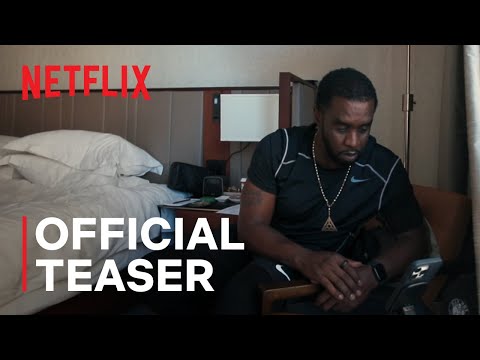
Netflix’s new docuseries Sean Combs: The Reckoning is effective not because it sensationalizes Diddy’s life but because it exposes the enduring architecture of power he built in a way that few other documentaries have. Directed by Alexandria Stapleton, the four-part series relies on the intimidation, secrecy, and complicity of those around him to illustrate that the behaviors he faced allegations for in 2023 were not isolated incidents, but part of a long-established pattern.
From the outset, the series situates Diddy’s rise fthin cycles of trauma and control. Episode one traces how childhood experiences—losing a father to violence and navigating a reportedly complex relationship with his mother—shaped not only his ambition but his understanding of leverage and power. These early lessons, the documentary implies, were internalized in ways that would later inform his treatment of employees, collaborators, and intimate partners. Survivors and former staff describe how these behaviors persisted decades later.
Capricorn Clark, a former Bad Boy assistant, recounts being threatened on her first day, eventually becoming his de facto manager and witnessing firsthand his manipulation and retaliation. Lil Rod, a former collaborator who filed a lawsuit around the time of Cassie’s, describes being coerced into lying after a violent studio shooting—an incident he likens to the Quad Studios attack involving Tupac. For a young producer seeking experience and payment, Rod describes navigating the alleged extremes of Diddy’s influence, where professional advancement is intertwined with moral compromise.
The abusive patterns that defined Diddy’s business dealings extended into his personal relationships. Manipulation, jealousy, and control became cornerstones of his interactions with Cassie, Misa Hylton, and Kim Porter. Clayton Howard, a male sex worker Cassie hired on Diddy’s behalf, described how jealousy would escalate during their “freak-offs,” resulting in physical abuse of Cassie. Roger Bonds recalled hearing Diddy assault Kim Porter, while Erick Sermon recounted confrontational encounters when Diddy discovered him spending time with Misa Hylton. Even the lawsuit involving Joi Dickerson-Neal, where she alleged that he sexually assaulted her and filmed it, later showing the footage on big screen TVs at parties, suggested how depraved his actions were, even before he was his own CEO. These incidents of possessiveness, sexual coercion, and abuse reflected the same hunger for power and dominance that shaped Diddy’s professional empire.
This same pattern of control and exploitation carried over into his business dealings. Former Bad Boy artist Mark Curry and Uptown A&R Tim Patterson echo this behavior, revealing consistent practices of delayed or withheld payment, emotional manipulation, and systemic exploitation. Curry, for example, details Diddy’s notorious habit of failing to compensate those who contributed to his projects.
The fourth episode ties these threads together, demonstrating how Diddy’s influence extended beyond professional exploitation into sexual and emotional manipulation. Lil Rod describes being groomed with promises of wealth and opportunity, then exposed to exploitative situations, including the alleged recruitment of women for sexual encounters. Clark recounts instances of threats, intimidation, and violence, including being forcibly involved in confrontations with Kid Cudi. Aubrey O’Day provides context for the legal and emotional barriers to coming forward, highlighting how Diddy’s influence silences victims and shapes narratives. Meanwhile, footage leading up to Diddy’s 2023 arrest illustrates his active attempts to manipulate public perception, leverage allies, and direct PR efforts to maintain control over the narrative.
Kirk Burrowes, co-founder of Bad Boy Records, offers critical testimony that underscores the overlap of professional and personal abuse. His 2003 lawsuit alleged Diddy’s involvement in the murder of Tupac—an event central to the East Coast-West Coast feud explored in episode two—alongside business practices that left him blacklisted, homeless, and financially exploited. Toward the end of the documentary, Burrowes alleges that Diddy sexually assaulted him during his time at Bad Boy.
The series also examines how mythmaking and celebrity bias functioned as shields. While 50 Cent’s role as producer could suggest partiality, the documentary maintains balance by integrating multiple voices and corroborating accounts. It contextualizes events like Shyne’s 1999 nightclub shooting conviction, the assault of Steven Stoute, and the night Biggie Smalls was killed, including previously unseen footage. By juxtaposing accounts from those who suffered, those complicit, and those who observed, the series illustrates how Diddy’s persona as a visionary mogul coexisted with a legacy of harm.
The chronological structure reinforces the pattern-based reading. From early conspiracies surrounding Tupac and Biggie, through Burrowes’ lawsuits and the sexual abuse allegations culminating in the 2023 arrest, the documentary shows that these behaviors were iterative rather than aberrational. Diddy’s methods of evasion, coercion, and narrative control remain consistent across decades and collaborators.
Sean Combs: The Reckoning is particularly effective in demonstrating the overlapping consequences of these behaviors. Clark and Lil Rod show how career advancement often came at the cost of personal exploitation. Burrowes and Curry highlight the professional risks of challenging Diddy. Footage leading up to his arrest captures the extreme lengths he went to manipulate perception in the digital age. Together, these examples construct a portrait of a man whose personal ambition is inseparable from a culture of control and complicity.
Ultimately, Sean Combs: The Reckoning is a study of how patterns of abuse, manipulation, and deception become shielded by money, fame, and cultural myth. Viewed through this lens, Diddy’s career is not just a story of a mogul who defied the odds—it is a story of a system that enabled, ignored, and celebrated him while leaving countless others to navigate the consequences. By combining testimony, archival footage, and juror insights, the series reveals a consistent architecture of power that has long defined his public and private life. But more importantly, it offers clarity on questions that have lingered over hip-hop and popular culture for decades.